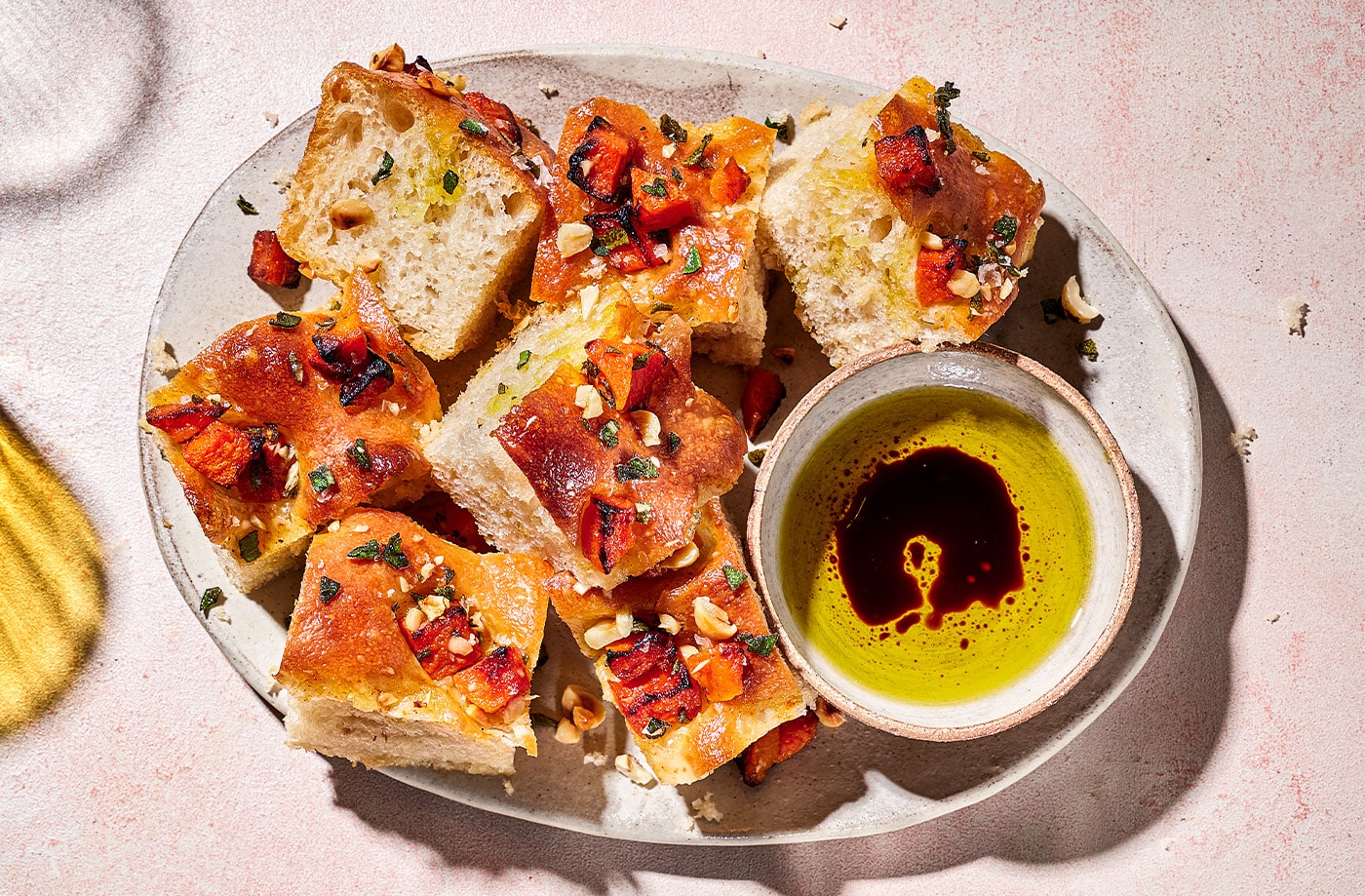
Silvana Franco's butternut focaccia with hazelnuts and sage recipe
Created by Silvana Franco
If you want to embrace the joys of slow cooking, bread making is a great place to start and we’ve got a gorgeous focaccia recipe from food writer Silvana Franco. ‘Focaccia is easy,’ says Silvana. ‘There’s no kneading, you just have to set aside plenty of time for the dough to rise slowly as you give it the occasional fold. Begin in the morning to enjoy for dinner, or chill it overnight for lunch the next day. This autumnal version features the magical pairing of squash and sage, with crunch and toasty depth from the hazelnuts.’
See method- Serves 10 as a side
- Takes 1 hr 30 mins plus at least 4 hrs rising and (optional) overnight proving
- 281 calories / serving
- Freezable
- Vegetarian
- Healthy
Ingredients
- 500g Tesco Finest very strong white bread flour
- 7g sachet fast-action yeast
- 10g fine salt
- 1 tsp caster sugar
- 6 tbsp Tesco Finest Italian extra-virgin olive oil
- 400g butternut squash, peeled and cubed
- ½ tsp smoked paprika
- 10g fresh sage leaves, finely chopped
- 30g hazelnuts, roughly chopped
- flaky sea salt (optional)
Ready to shop?
Shop ingredientsEach serving contains
- Energy
- 1180kJ 281.0kcal
- Fat
- 10g
- Saturates
- 2g
- Salt
- 1.1g
- Sugars
- 4g
of the Reference intake
Carbohydrate 38.1gProtein 7.8gFibre 2.5g
Shop your ingredients
Sign in to see your total price and explore available product swaps.
Method
- Mix the four, yeast, salt and sugar in a large bowl. Using a wooden spoon, stir in 400ml lukewarm water and 2 tbsp oil, bringing together into a sticky dough. Cover with a tea towel and rest for 30 mins.
- Wet your hand, then scoop under the dough at the edge of the bowl furthest away from you. Stretch it upwards, folding it over the top of the dough. Give the bowl a quarter turn and repeat the stretch, fold and turn motion three more times. Cover and leave the dough to rise for 4-5 hrs, repeating the stretch and fold three or four more times, roughly once an hour. During this time the dough will slowly double in size.
- Generously brush a 31 x 22cm baking tin with olive oil and tip in the dough. Drizzle a little more oil over the surface then, using your fingertips, gently press the dough out to the edges of the tin. If it resists at all, leave to relax a little before pressing again. At this stage you can either bake the butternut squash (see step 4), then the focaccia. Or, for the best flavour and texture, loosely cover the tray with clingfilm and chill overnight. (If chilling, remove the tin from the fridge and set aside at room temperature for 2 hrs to warm up.)
- Preheat the oven to gas 6, 200°C, fan 180°C. Toss the butternut squash with 1 tbsp oil, the paprika and a little salt. Spread out on a baking tray and cook for 15-20 mins until just tender but not browned. Tip onto a plate and leave to cool a little.
- Increase the oven temperature to gas 9, 240°C, fan 220°C. Place an empty baking tray near the bottom of the oven, then pour in about 400ml boiling water. This will create steam and help the focaccia rise. Press the cooked butternut pieces into the surface of the dough, then bake the focaccia for 20 mins until risen and golden.
- Meanwhile, mix the chopped sage, hazelnuts and remaining 1 tbsp oil. Scatter over the focaccia along with a sprinkle of flaky salt, if you like, and bake for 5-10 mins until the top is crunchy and browned. Cool in the tin for 5 mins, then transfer onto a wire rack and leave to cool completely before slicing. Serve as part of an antipasti selection at the beginning of a long meal or with tomatoes, cheese and salami, like an Italian-style ploughman’s lunch.
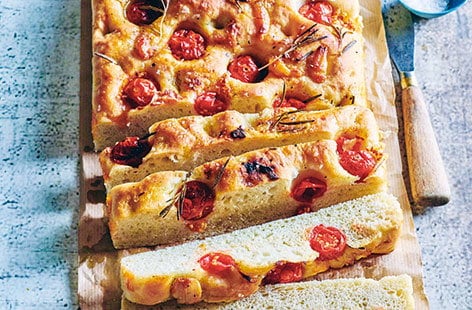
- Tip: Swap the squash for whole cherry tomatoes (no need to pre-roast them), roasted peppers from a jar, or cubes of cheese such as mozzarella or Taleggio.
- Use it up: Store in an airtight container for up to 2 days. Slice leftovers to make mozzarella-stuffed French toast sandwiches or paninis. Or tear into chunks and use in panzanella salad or to make rustic croutons.
- See more Italian recipes
Freezing and defrosting guidelines
Wrap well before freezing. In order to enjoy optimum flavour and quality, frozen items are best used within 3 months of their freezing date. For more tips on freezing and defrosting food, read our article Love Your Freezer.