Tesco Wine by the case homepage

'Skip to' navigation

user navigation


Welcome to Tesco Wine by the case.

We hope you enjoy your visit.

Sign in / Register as a new customer


Main Content Link

Over the past decade, there has been a massive leap in quality of the wine from Chile and Argentina. Investment in new regions, more advanced winemaking techniques and a dazzling range of different styles have ensured that both countries are now firm favourites with UK wine-drinkers.
Chile

Chile is one of the most spectacular wine destinations in the world. Journey from north to south and your 2,600 mile trip will take you past dramatic moonscapes, active volcanoes, beautiful beaches and pristine glaciers. Yet travel from west to east and you're likely to run out of road in just 110 miles: Chile is an amazingly thin country, literally squashed between the Pacific Ocean and the imposing Andes. Remarkably, such extreme geography helps to make Chile a wine-makers' paradise. While the Andes protect the vines from pests and diseases found elsewhere in the world, the Pacific Ocean moderates the climate, so the grapes can ripen gently over the long, dry summers. To top it off, there's an endless supply of melted snow from the mountains to water the vines. No wonder Chilean vines tend to be superbly healthy, producing wines that are deliciously fresh and pure. Many wine-makers are now capitalising on this by offering organic wines, as they are ideally suited to such idyllic growing conditions.


Take a tour of the wines of South America Chile's wine regions are sandwiched between the coast and mountains in a series of scenic valleys running east to west. As you go westwards, the ocean combines with the coastal mountain ranges to create a number of different microclimates, perfect for growing nearly every type of grape. Many wineries take advantage of this by growing grapes across a range of valleys, thereby enabling them to match climate to grape. Most people start their wine tour of Chile in the capital, Santiago. One of Latin America's most modern cities, it combines a rich cultural heritage with impressive high-rise architecture. Wine-making took off here in the 1840s when the French arrived with cuttings of Cabernet Sauvignon, Merlot, Sauvignon Blanc and Sémillon from Bordeaux. Building impressive châteaux in the suburbs of the city, they soon gained a reputation for elegant Bordeaux-style reds and whites.

 
Spanish wine

Today, Santiago remains at the heart of Chilean wine-making and many wineries in the surrounding Maipo Valley are within easy reach. Cabernet Sauvignon from the region can be world class with the best examples made from old vines that deliver magnificently concentrated flavours of fresh blackcurrants. An hour's drive north of Santiago is the Casablanca Valley, a cool coastal region that's home to a host of ultra-modern wineries and some of Chile's best Chardonnay and Sauvignon Blanc. The style of wine here is beautifully complex, thanks to summer fogs which envelop the vineyards in the mornings, slowing the ripening process and thereby creating masses of flavour in the grapes.


Travel south a few miles and you come to one of Chile's very latest wine regions, the Leyda Valley. At just 10 miles from the Pacific, the Leyda Valley is strongly influenced by the cooling effects of the Ocean and is now making a name for itself with some excellent Pinot Noir, Chardonnay and Sauvignon Blanc. To get a feel for Chile's winemaking past, many visitors hop aboard a 1920s steam train from San Fernando, just south of Santiago, which runs the length of the Colchagua valley to the south of the city. It's a brilliant way to visit some of Chile's most impressive boutique estates, renowned for making outstanding full-bodied reds from Cabernet Sauvignon, Merlot and Carmenere.


Exciting new regions The search is always on in Chile to find and develop new regions where grapes have never been grown. In fact some Chilean wine-makers joke that the best Chilean vineyards have yet to be discovered. Travel south of Chile's Central Valley, for example, and the climate begins to change, becoming wetter and cooler by the time you reach Bío Bío and Itata. Up until about 10 years ago, Chilean wine-makers put off venturing this far south, but they are now making some superb wines from grapes which like a cooler climate. Riesling, Chardonnay and Pinot Noir all excel here, often distinguished by the sheer purity and elegance of the fruit.

Spanish wine

At the other end of the spectrum, the sun-baked region of Limarí in the far north of the country is now attracting wine-makers, even though it is one of the driest places on earth. Taking advantage of its cool, coastal areas, they are creating beautifully intense whites from white grapes such as Sauvignon Blanc and Chardonnay. Just as exciting, they have also discovered that Syrah thrives here too, producing amazingly deep coloured reds with incredible black fruit and black pepper flavours. More recently some adventurous wine-makers have ventured even further north to the Elqui Valley, now the most northerly of all Chilean wine regions. Carmenere, Syrah and Chardonnay are already growing successfully here, and even Sauvignon Blanc is appearing to thrive in this spectacularly dry region.


Carmenere Despite arriving in the late 1840s along with other Bordeaux varieties, Carmenere over time effectively disappeared. For decades it was wrongly identified as Merlot. However in 1994 its true identity was rediscovered and many Chilean wine-makers are now championing the grape, making superb, velvet textured reds with wonderful black fruit and herbal flavours.


Sauvignon Blanc Of all the white grapes, it's Sauvignon Blanc which is now putting Chile on the world wine map. The wines from the coastal regions such as San Antonio and Leyda can be amazingly clean and fresh-tasting with great emphasis on the purity of the fruit, even rivalling the best from Marlborough in New Zealand.

Argentina
 

Over three times as large as Chile, with a history of wine-making stretching back over 500 years, Argentina is the fifth largest wine-producing country in the world and makes more wine than Australia and New Zealand put together. Its total production dwarfs that of Chile yet in the UK we drink nearly seven times as much wine from Chile as we do from Argentina. The obvious question is why aren't we drinking more Argentinian wine? The simple answer is that until recently, and unlike Chile, the wine industry in Argentina was almost totally focused on its home market. The country was producing a huge amount of wine but the only people drinking it were the Argentinians themselves. This is beginning to change as Argentina has started to focus on the world market and we can expect to see many more of its wines over here. Thankfully, it's been worth the wait. Argentina has everything going for it: varied and interesting regions, excellent wine-making expertise, a fantastic food and wine culture and some genuinely different styles of wine. Many of us have already discovered the fantastic combination of a thick, juicy steak accompanied by a delicious glass of Malbec. Now it's time to discover all the other treats on offer from this vibrant South American country.


Amazing variety of grapes Although Argentina's first vines were planted in 1541 by the Spanish, it wasn't until three hundred years later that winemaking really took off when a new wave of Spanish, Italian and French settlers arrived, bringing an amazing variety of grapes with them. The settlers soon realised that the best regions for grapes were in the foothills of the Andes, where the climate was coolest. As a consequence, most of Argentina's vineyards are confined to a 650-mile stretch of spectacular mountain-backed vineyards from Salta Province in the subtropical north to Rìo Negro on the frontiers of Patagonia. With the exception of Rìo Negro, most vineyards lie 1,500 to 3,000 feet above sea level. At high altitudes like this, cold nights follow hot sunny days, giving grapes beautifully rich and complex flavours as they slowly ripen on the vines.

wine maker
 

Snow-capped mountains Most people start their wine tour in Mendoza, by far the most important wine-growing province of Argentina. Mendoza City itself makes the perfect base, with handsome boulevards, a sophisticated nightlife and a magnificent backdrop of snow-capped mountains. The ideal time to visit is during the Fiesta Nacional de la Vendimia in March, a weeklong festival in the middle of the harvest. Many of the nearby wineries offer free tastings and are renowned for their deep flavoured reds made from Malbec, Cabernet Sauvignon and the Italian grape Bonarda. Of all the reds, Mendoza Malbec is justly world famous and can be exceptional, often delivering an amazing array of deep black fruit flavours with lovely violet aromas. White wine from Mendoza is increasingly available and well worth searching out. Sauvignon Blanc and Chardonnay can be outstanding as can the many blends from the region, which often include a touch of peach-scented Viognier or floral Torrontés.


Few tourists venture north in the summer to visit Argentina's second most important region, San Juan, as the midday temperatures here can reach 42°C. To compensate for the heat, the vineyards are even higher. Such conditions suit a selection of red grapes, with Syrah in particular producing fantastically rich and complex wines that can be absolutely delicious. Travel north of San Juan and the vineyards become even more elevated. In Salta Province on the border of Paraguay and Bolivia, vineyards are mostly 5,500 feet above sea level with the highest at 9,891 feet. It's here where Torrontés thrives, making superb mountain wines as clean and pure as the melted snow that runs off the mountains to feed the vines.


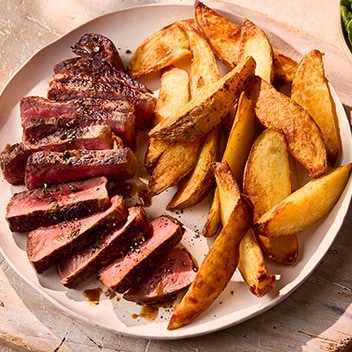
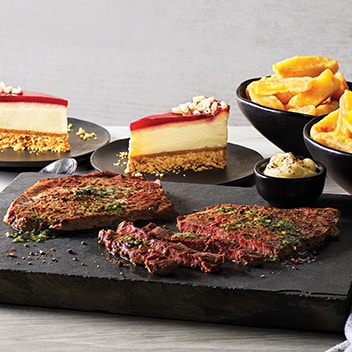
Malbec The grape behind the deep coloured wines of Cahors in south-west France thrives in the sunny climate of Argentina, producing rich, juicy wines with flavours of blackcurrants, plums and spice, the perfect partner for a juicy steak.


Torrontés A crossing between the Muscat grape and a local pink variety, Torrontés has justly become the signature white variety of Argentina, making beautifully floral scented wines with peach and honey flavours.

Search link

Wine basket

Wine: Please order in multiples of 12 bottles

Champagne: Please order in multiples of 6 bottles

You are currently unable to checkout as your basket does not meet the order quantity, learn more about order quantities.

Cases

Shopping Basket
Quantity ProductPriceRemove from Basket
There are no items in your basket
  • Subtotal (0 items)£0.00
  • Total Clubcard points0
View full basketCheckout